






The physical retail landscape was already evolving well before COVID, but the rapid growth of online giants has accelerated the need for change. Today, brick-and-mortar retailers can no longer rely on product alone. To stay competitive, they must focus on retail experience design.
Retail experience design is about creating meaningful, engaging in-store environments that encourage customers to stay longer, interact more, and connect emotionally with a brand. Through strategic retail signage, digital displays, and considered store fit-outs, physical retail can offer something online shopping cannot: a tangible, immersive experience.
Immersion through retail experience design
One of the most powerful drivers of modern retail experience design is immersion. Leading retailers are using technology and spatial design to transform stores into environments that evoke emotion and inspire action.
Immersive retail environments often incorporate digital signage elements such as video walls, LED hero displays, and large-format screens. These tools help tell a brand story, showcase products dynamically, and guide customers through the space. This approach is closely tied to the concept of “retailtainment”, where ambience, sound, movement, and visual storytelling work together to influence purchasing behaviour.
A strong example of immersive retail experience design can be seen in Rebel’s RCX (Rebel Customer Experience) concept stores. CV Media & Signage partnered with Rebel to deliver comprehensive retail signage and digital fit-outs across their first RCX locations. The solution included video walls, LED displays, digital screens, and LED tickers, creating highly engaging environments that encourage exploration and interaction. These stores demonstrate how physical retail can thrive by leaning into experience-led design rather than competing solely on convenience.
Interactivity
While immersion introduces new touchpoints, interactivity enhances existing ones. Effective retail experience design places the customer at the centre of every decision, particularly as younger, tech-savvy consumers continue to raise expectations around service and accessibility.
Interactive retail signage, such as touch screen kiosks and digital directories, allows customers to access information instantly and navigate stores with ease. These systems reduce friction in the customer journey while creating a more personalised and empowering in-store experience.
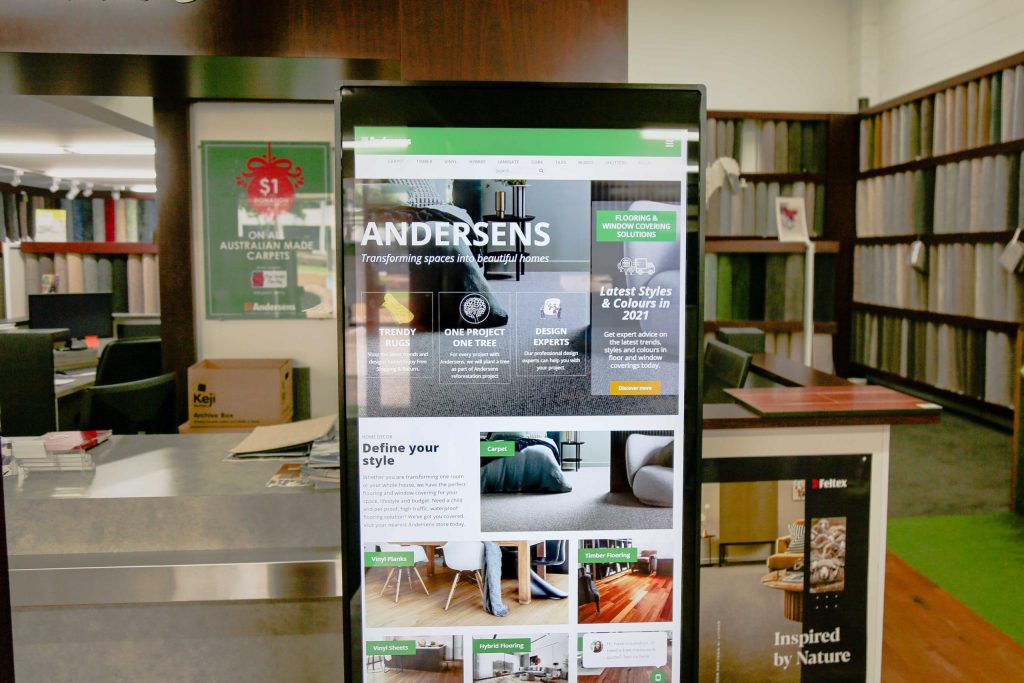
Andersens provides a strong example of how interactive signage supports retail experience design. To better engage digital-native customers, Andersens partnered with CV Media & Signage to install over forty freestanding 49-inch touch screen displays across multiple stores. These interactive signage solutions allow customers to browse products, access information, and take action independently. By integrating technology into the physical store environment, Andersens strengthened customer engagement and improved overall satisfaction.
Minimalism
Not all retail experience design relies on bold visuals or advanced technology. Minimalism continues to play an important role in helping brands cut through visual clutter. Modern retail signage trends favour clean layouts, restrained colour palettes, and clear messaging. Minimalist signage helps customers process information quickly and creates a calm, premium shopping environment. In an industry where many brands compete for attention, simplicity can be a powerful differentiator.
When combined with high-quality materials and strategic placement, minimalist retail signage enhances brand perception and supports a seamless customer journey. It also allows immersive and interactive elements to stand out without overwhelming the space.
The future of retail experience design
Retail experience design is no longer optional. As consumer expectations continue to rise, physical retailers must invest in thoughtful store design, digital signage, and interactive solutions to remain relevant. Technology-driven retail signage, immersive environments, and minimalist design are shaping the future of in-store experiences. By embracing these elements, retailers can create spaces that not only attract customers but encourage loyalty, engagement, and repeat visits.


